
CASE STUDY: spore to sea campaign for kri
Spore to Sea: A Giving Tuesday Donation Campaign
Client: The Kelp Rescue Initiative
My role: Campaign strategy and management, science writing, narrative design, graphic design, content planning and visual storytelling
Giving Tuesday is one of the most competitive fundraising days of the year. Organizations are expected to communicate urgency, impact and credibility in a matter of seconds, often to audiences who are encountering their work for the first time.
The Kelp Rescue Initiative was still in the early stages of building a consistent public audience. Many followers were recent, and much of the community was still learning what kelp restoration is, how it works and why it matters.
For that reason, Spore to Sea was designed as a Giving Tuesday campaign that did more than ask for donations. The goal was to meet audiences where they were in their journey by using the moment to build understanding, establish trust and clearly show how kelp restoration happens before asking for support.
Rather than centering on a single ask, the campaign focused on process, transparency and scale.
The challenge
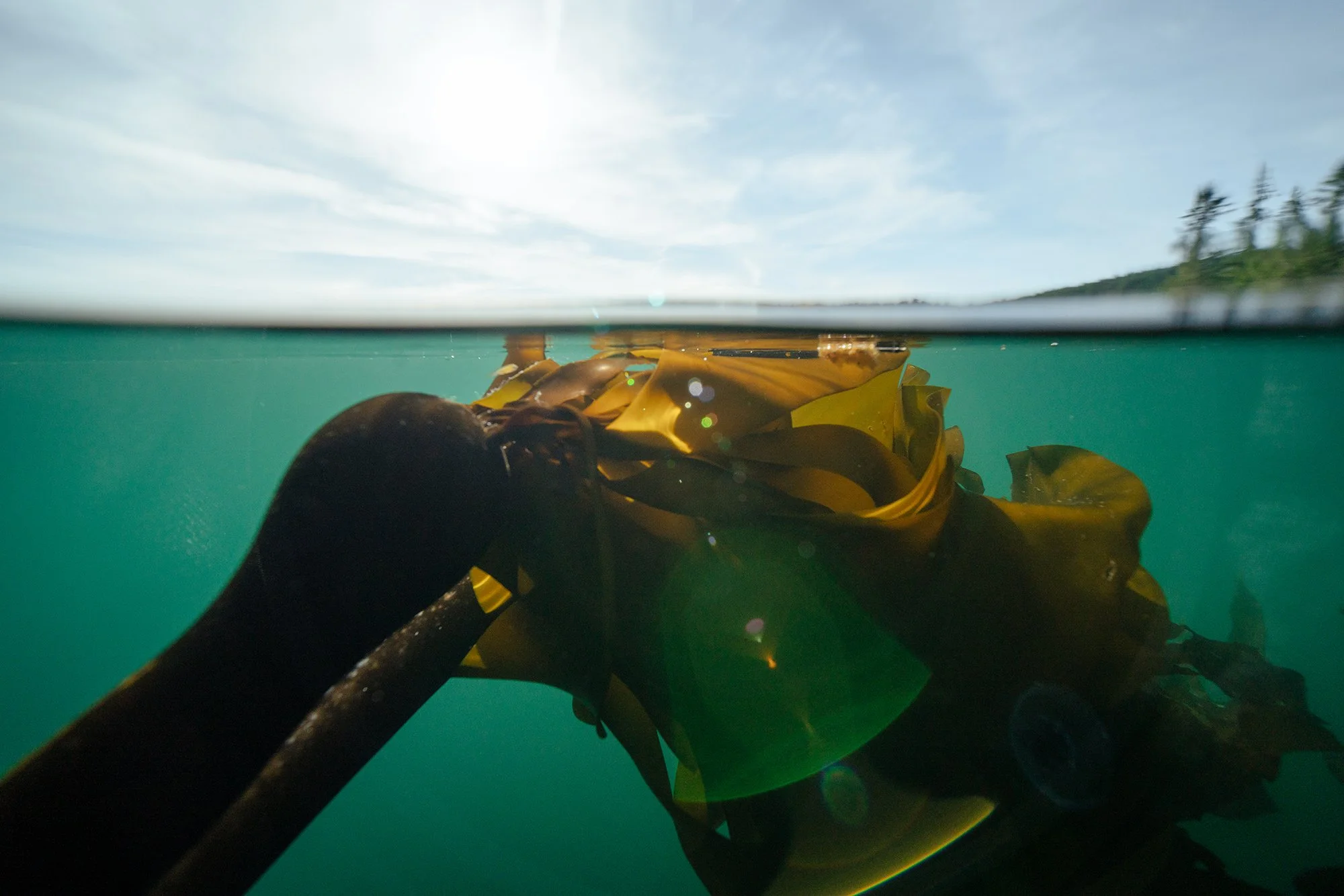
Kelp restoration is not intuitive to most audiences. The work unfolds over time, underwater and largely out of sight. For newer audiences, this creates a barrier to engagement. If people do not yet understand what an organization does or how restoration works, it is difficult for them to feel confident donating.
On Giving Tuesday, this challenge becomes more acute. Audiences are inundated with appeals and attention is limited.
The campaign needed to:
Explain kelp restoration quickly and accurately
Make an invisible process tangible and visual
Support early-stage audience education and trust-building
Demonstrate credibility through transparency
Compete for attention on a high-noise fundraising day
Convert curiosity into action without overwhelming the audience
The concept: From process to story
Spore to Sea was built around a simple narrative arc that followed kelp from its earliest life stage through to restoration in the ocean.
By structuring the campaign around the lifecycle of kelp, the science became the story. Each phase offered a natural opportunity to explain what was happening, why it mattered and how support enabled the work to continue.
This structure allowed the campaign to function simultaneously as a fundraising appeal and a public education tool, particularly well-suited to an audience still becoming familiar with kelp restoration and the role of The Kelp Rescue Initiative.
Strategy and methodology
1. LEAD WITH CLARITY
Instead of beginning with a donation ask, the campaign started with an invitation into the restoration journey.
Posts and visuals walked audiences through the restoration process step by step, from spore collection to nursery cultivation to outplanting and monitoring. This sequencing helped orient newer followers, reduced confusion and created shared understanding before introducing calls to action.
2. USE PROCESS AS PROOF
Transparency was a central pillar of the campaign.
By showing how restoration happens in real terms, the campaign demonstrated credibility without relying on abstract claims. Field imagery, clear language and process-based storytelling helped audiences see what their support enabled.
To ensure accuracy, I worked closely with scientists at The Kelp Rescue Initiative to verify my understanding of each stage of the restoration cycle. Technical processes were reviewed collaboratively so that simplified explanations remained scientifically sound while accessible to non-specialist audiences.
This approach was particularly important for donors encountering kelp restoration for the first time.
3. DESIGN FOR SHORT ATTENTION SPANS AND DEEPER DIVES
Giving Tuesday audiences move quickly, but not all are at the same point in their learning journey.
The campaign was designed to accommodate both. Short-form social posts introduced each stage of the process, with visuals carrying much of the explanation. For those who wanted to learn more, longer captions and linked content provided additional depth.
This layered structure allowed education and engagement to happen without fragmenting the message.
4. INTEGRATE EDUCATION AND ACTION
Every piece of content connected learning to participation.
Once audiences understood what spore to sea restoration involved, calls to action felt logical and earned. Donations were framed as a way to support specific stages of the process rather than a generic contribution.
This helped bridge the gap between awareness and action, especially for newer followers still building trust.
Outcomes and impact
Spore to Sea functioned as more than a one-day fundraising push.
The campaign:
Increased public understanding of kelp restoration processes
Supported early-stage audience education and trust-building
Built credibility through transparent, science-forward storytelling
Created a clear, repeatable narrative for future outreach
Produced content that could be reused beyond Giving Tuesday
By aligning fundraising with education, the campaign positioned kelp restoration as work that is understandable, credible and worthy of long-term support.
Why this approach works
Giving Tuesday rewards clarity, particularly for organizations still building public awareness.
When audiences understand what an organization does and how support translates into real-world action, they are more likely to engage meaningfully. By using process as narrative, Spore to Sea turned a complex restoration effort into a story people could follow, even at an early stage in their relationship with The Kelp Rescue Initiative.
This approach replaces pressure with informed participation.
What this case study demonstrates
This campaign reflects how I approach time-bound fundraising moments for science-based organizations, especially those with growing or newly engaged audiences.
I design Giving Tuesday campaigns that:
Meet audiences early in their learning journey
Educate before they ask
Make invisible work visible
Use science as a narrative rather than a barrier
Build trust that extends beyond a single day
Spore to Sea shows how a high-pressure fundraising moment can be used to deepen understanding, credibility and long-term connection, not just drive clicks.